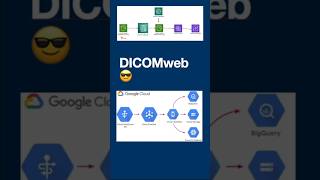
Dicomweb to rescue ( for full stack developers) #dicomweb #dicom #healthcareinnovation #software
Description: DICOMweb is a set of RESTful web services defined within the DICOM (Digital Imaging and Communications in Medicine) standard. It is the modern, web-friendly way to exchange, query, and store medical images (like X-rays, MRIs, and CT scans) and related data over the internet.
It leverages common web technologies like HTTP/HTTPS, RESTful APIs, and JSON or XML for metadata, making it easier to integrate medical imaging into modern applications.
Key DICOMweb services include:
WADO-RS (Web Access to DICOM Objects - RESTful Services): For retrieving medical images and their metadata.
QIDO-RS (Query based on ID for DICOM Objects - RESTful Services): For searching for studies, series, or individual images.
STOW-RS (Store Over Web - RESTful Services): For storing (sending) DICOM objects to an archive.
Why Full Stack Developers Should Know DICOMweb
A full stack developer should understand DICOMweb because it is the bridge between traditional medical imaging systems (PACS/VNA) and modern web and cloud applications.
Growing Healthcare IT Sector: Healthcare is a massive and expanding field. If you work on any healthcare application—from Electronic Health Records (EHRs) and telemedicine platforms to patient portals—you will likely need to integrate medical images.
Web-Native Integration: Traditional DICOM networking protocols are complex and not inherently web-friendly. DICOMweb, using standard REST principles, is instantly accessible using familiar tools, frameworks, and languages (JavaScript, Python, C#, etc.).
Cloud-Based Solutions: Major cloud providers (AWS, Azure, Google Cloud) offer services built around DICOMweb, making it essential for developing scalable, cloud-native medical imaging solutions.
Developing Modern Viewers: To build a browser-based DICOM viewer—a critical component in modern healthcare software—you must use DICOMweb to fetch the images and metadata efficiently to the client side.
Interoperability: Knowing DICOMweb ensures your applications can communicate with other compliant systems, which is mandatory in the regulated healthcare environment. Close description