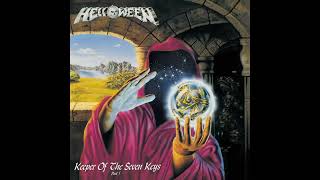
Helloween – Keeper Of The Seven Keys Part 1 (Full Album) 1987 With Bonus Tracks
Description: Tales of the Sonic Voyage Presents
Helloween – Keeper of the Seven Keys Part I (1987)
Expanded Edition with Bonus Tracks
Helloween formed in Hamburg, West Germany, in 1984, bringing together Kai Hansen, Michael Weikath, Markus Grosskopf and Ingo Schwichtenberg. Their sound joined British heavy metal's twin-guitar melodies with European speed-metal aggression. Hansen initially handled lead vocals as well as guitar.
Their self-titled EP and debut album Walls of Jericho, both released in 1985, established Helloween as an exciting new force in German metal. The music was fast, tightly played and full of melodic ideas, but singing while delivering complicated guitar parts became increasingly difficult for Hansen. They began looking for a dedicated vocalist to broaden their possibilities.
That search led to Michael Kiske, a young Hamburg singer who had performed with Ill Prophecy. Joining in 1986, he brought a clear, powerful voice with an exceptional upper register. Hansen could now concentrate on guitar and songwriting, while Kiske gave the band room to develop stronger vocal arrangements and greater contrasts between aggression, atmosphere and emotion.
Keeper of the Seven Keys Part I was the first album recorded by this five-piece lineup. Released in 1987, it became the decisive step between Helloween's early speed-metal identity and the melodic power-metal sound with which their name would become closely associated.
The album was recorded and mixed at Horus Sound Studio in Hanover during November and December 1986 and January 1987. Tommy Newton and Tommy Hansen worked with the band on the production, helping give the increasingly elaborate arrangements the clarity they needed. The vocals and instrumental detail had more space than on the earlier recordings.
Hansen and Weikath had accumulated enough material to envision a double album, but that plan was turned down and the project developed into two separate releases. Part I appeared in 1987, with Part II following in 1988. Hansen's songwriting dominates the first installment, alongside contributions from Weikath and Kiske, bringing different musical personalities into the record.
Its importance lies in how naturally it joins speed with melody. The guitar parts can be demanding and rapid, yet the choruses remain immediately recognizable. Harmonized leads and strong vocal lines make the music accessible without reducing its complexity. Quieter passages and changes in mood give the heavier sections greater impact.
Kiske's arrival is central to that balance. His singing carries the music through its fastest passages while also bringing warmth and vulnerability to the more reflective moments. His soaring melodic voice complemented a band that retained the attack of its speed-metal beginnings.
The instrumental partnership is equally important. Hansen and Weikath exchange lead passages and build harmonies that make the guitars an integrated part of the writing. Grosskopf's bass and Schwichtenberg's drumming supply an active, tightly coordinated foundation. Beneath the bright melodies is a rhythm section capable of maintaining momentum through shifts in pace and structure.
Fantasy, questions of good and evil, uncertainty and the search for direction give the record much of its atmosphere. Its dramatic atmosphere never obscures the youthful enthusiasm of the performances.
This presentation includes the original eight-song album followed by four bonus recordings. These additional versions offer another perspective on the band's transition into the Kiske era and the ways its material was revisited or adapted. They extend the listening experience beyond the original album sequence while keeping that sequence intact.
Together with its sequel, Keeper of the Seven Keys Part I helped establish a model that countless European power-metal bands would develop: fast rhythms, twin guitars, clean high-register vocals, memorable choruses and room for ambitious compositions. The album captures young musicians discovering a sound that would travel far beyond Hamburg and help shape an entire branch of heavy metal.
Musicians
Michael Kiske – lead vocals
Kai Hansen – guitar and backing vocals
Michael Weikath – guitar and backing vocals
Markus Grosskopf – bass and backing vocals
Ingo Schwichtenberg – drums
Tracklist
1. Initiation
2. I'm Alive
3. A Little Time
4. Twilight of the Gods
5. A Tale That Wasn't Right
6. Future World
7. Halloween
8. Follow the Sign
Bonus Tracks
9. Victim of Fate (Michael Kiske Version)
10. Starlight (Remix)
11. A Little Time (Alternative Version)
12. Halloween (Video Edit)
Thank you for joining me on Tales of the Sonic Voyage. If you enjoy these journeys through remarkable music and the artists who helped shape it, please subscribe, leave a comment and share this album with another listener. Keep listening, keep discovering, and help spread the music. Close description
Helloween – Keeper of the Seven Keys Part I (1987)
Expanded Edition with Bonus Tracks
Helloween formed in Hamburg, West Germany, in 1984, bringing together Kai Hansen, Michael Weikath, Markus Grosskopf and Ingo Schwichtenberg. Their sound joined British heavy metal's twin-guitar melodies with European speed-metal aggression. Hansen initially handled lead vocals as well as guitar.
Their self-titled EP and debut album Walls of Jericho, both released in 1985, established Helloween as an exciting new force in German metal. The music was fast, tightly played and full of melodic ideas, but singing while delivering complicated guitar parts became increasingly difficult for Hansen. They began looking for a dedicated vocalist to broaden their possibilities.
That search led to Michael Kiske, a young Hamburg singer who had performed with Ill Prophecy. Joining in 1986, he brought a clear, powerful voice with an exceptional upper register. Hansen could now concentrate on guitar and songwriting, while Kiske gave the band room to develop stronger vocal arrangements and greater contrasts between aggression, atmosphere and emotion.
Keeper of the Seven Keys Part I was the first album recorded by this five-piece lineup. Released in 1987, it became the decisive step between Helloween's early speed-metal identity and the melodic power-metal sound with which their name would become closely associated.
The album was recorded and mixed at Horus Sound Studio in Hanover during November and December 1986 and January 1987. Tommy Newton and Tommy Hansen worked with the band on the production, helping give the increasingly elaborate arrangements the clarity they needed. The vocals and instrumental detail had more space than on the earlier recordings.
Hansen and Weikath had accumulated enough material to envision a double album, but that plan was turned down and the project developed into two separate releases. Part I appeared in 1987, with Part II following in 1988. Hansen's songwriting dominates the first installment, alongside contributions from Weikath and Kiske, bringing different musical personalities into the record.
Its importance lies in how naturally it joins speed with melody. The guitar parts can be demanding and rapid, yet the choruses remain immediately recognizable. Harmonized leads and strong vocal lines make the music accessible without reducing its complexity. Quieter passages and changes in mood give the heavier sections greater impact.
Kiske's arrival is central to that balance. His singing carries the music through its fastest passages while also bringing warmth and vulnerability to the more reflective moments. His soaring melodic voice complemented a band that retained the attack of its speed-metal beginnings.
The instrumental partnership is equally important. Hansen and Weikath exchange lead passages and build harmonies that make the guitars an integrated part of the writing. Grosskopf's bass and Schwichtenberg's drumming supply an active, tightly coordinated foundation. Beneath the bright melodies is a rhythm section capable of maintaining momentum through shifts in pace and structure.
Fantasy, questions of good and evil, uncertainty and the search for direction give the record much of its atmosphere. Its dramatic atmosphere never obscures the youthful enthusiasm of the performances.
This presentation includes the original eight-song album followed by four bonus recordings. These additional versions offer another perspective on the band's transition into the Kiske era and the ways its material was revisited or adapted. They extend the listening experience beyond the original album sequence while keeping that sequence intact.
Together with its sequel, Keeper of the Seven Keys Part I helped establish a model that countless European power-metal bands would develop: fast rhythms, twin guitars, clean high-register vocals, memorable choruses and room for ambitious compositions. The album captures young musicians discovering a sound that would travel far beyond Hamburg and help shape an entire branch of heavy metal.
Musicians
Michael Kiske – lead vocals
Kai Hansen – guitar and backing vocals
Michael Weikath – guitar and backing vocals
Markus Grosskopf – bass and backing vocals
Ingo Schwichtenberg – drums
Tracklist
1. Initiation
2. I'm Alive
3. A Little Time
4. Twilight of the Gods
5. A Tale That Wasn't Right
6. Future World
7. Halloween
8. Follow the Sign
Bonus Tracks
9. Victim of Fate (Michael Kiske Version)
10. Starlight (Remix)
11. A Little Time (Alternative Version)
12. Halloween (Video Edit)
Thank you for joining me on Tales of the Sonic Voyage. If you enjoy these journeys through remarkable music and the artists who helped shape it, please subscribe, leave a comment and share this album with another listener. Keep listening, keep discovering, and help spread the music. Close description